
Cork sourcing in Portugal is not a marketing story. For Birkenstock, it’s a manufacturing constraint that became a competitive advantage — and it tells you something important about how the best supply chains are built.
Here’s how a commodity material from one country became the foundation of one of the most imitated-but-never-replicated products in global footwear.
Cork Is a Commodity. So Why Can’t Anyone Copy Birkenstock?
Cork grows on the bark of the cork oak tree (Quercus suber), and roughly 50% of the world’s commercial cork supply comes from Portugal — particularly from the Alentejo region in the country’s south. Spain accounts for most of the rest, with smaller amounts coming from Algeria, Morocco, and Italy.
So the raw material is accessible. It’s not locked behind exclusive contracts or secret forests.
What makes Birkenstock’s cork footbed difficult to replicate isn’t the cork itself. It’s three things working together:
1. Material specifications built over 130 years Birkenstock has been working with cork since the 1890s, when Conrad Birkenstock began experimenting with cork insoles designed to support the natural contours of the foot. That’s over a century of material refinement — understanding exactly what density, compression ratio, and curing process produces the right balance of impact absorption and long-term resilience.
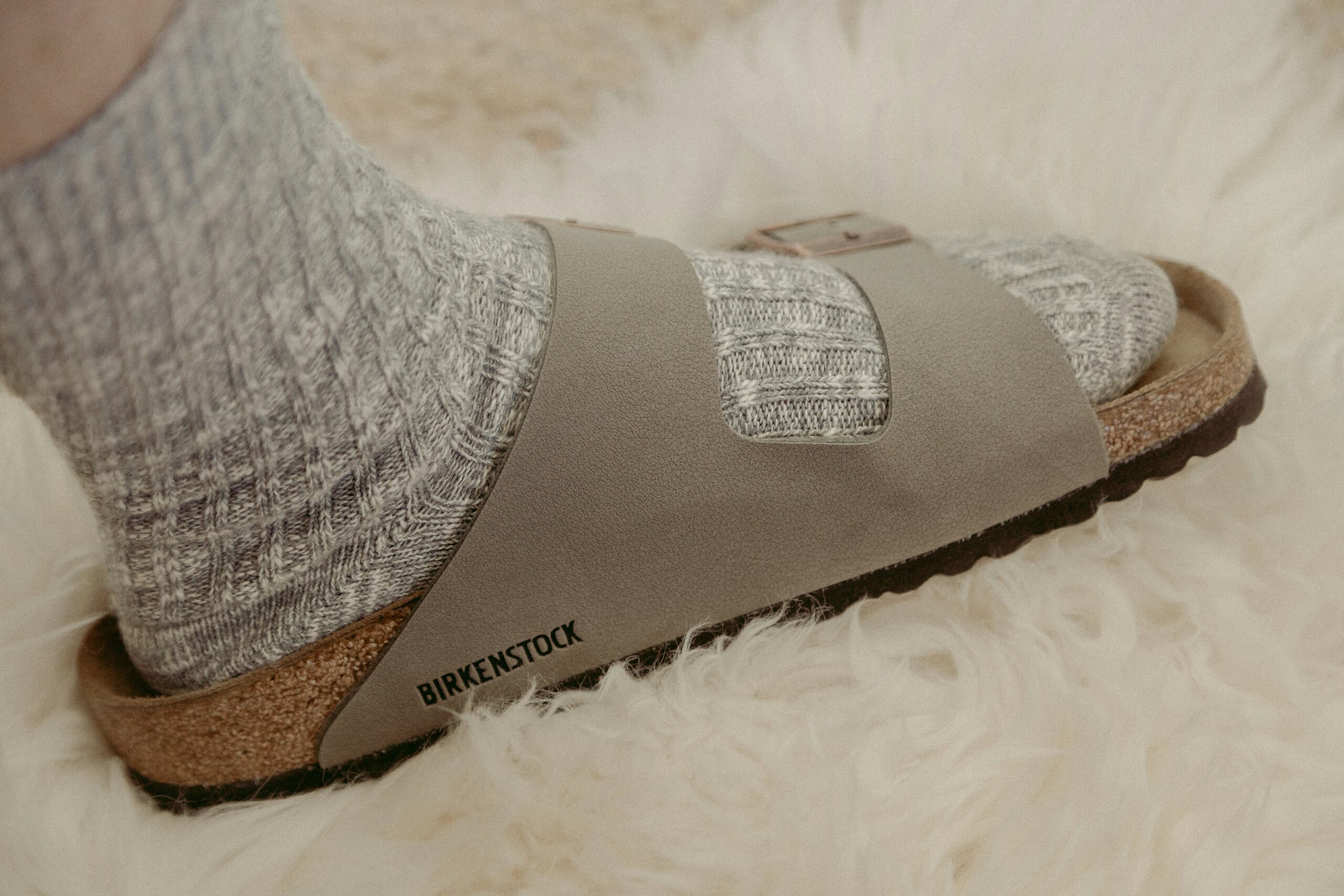
2. A layered system, not a single material The Birkenstock footbed isn’t just cork. It’s a laminated system: a cork-latex core for structural backbone, a jute layer for reinforcement, and a suede lining for comfort. Each layer interacts with the others. The cork is sourced and processed to work within that specific system — not as a standalone component.
3. Manufacturing concentration as quality control Birkenstock produces the majority of its footwear in Germany, and it processes cork within that same controlled environment rather than outsourcing to a fragmented network of suppliers. That means the sourcing relationship with Portuguese cork suppliers isn’t arm’s-length. It’s deeply integrated with how the product is made.
What Portugal’s Cork Industry Actually Looks Like
Portugal’s dominance in cork production is a function of climate, soil, and centuries of cultivation. Cork oak trees require a specific Mediterranean climate — warm, dry summers and mild winters — and they take about 25 years to produce their first commercial harvest. After that, cork is stripped from the bark roughly every nine years without harming the tree.
The result is a supply chain that is:
Geographically concentrated. The best cork comes from a relatively small region of southwestern Europe. You can’t move it.
Slow to scale. New cork oak plantations take decades to mature. Supply doesn’t respond quickly to demand spikes.
Quality-variable. Cork quality varies significantly based on tree age, harvest timing, and processing method. High-quality cork — the kind suitable for precision footwear applications — requires relationships and specifications, not just purchase orders.
For a brand like Birkenstock, this means their supply chain is a sourcing relationship that took time to build and requires ongoing management. That’s not a weakness. It’s a barrier competitors would have to replicate from scratch.
The Sourcing Lesson Founders Usually Miss
Most early-stage brands are optimizing sourcing for flexibility. Find suppliers you can walk away from. Keep options open. Don’t over-concentrate.
That logic makes sense at low volumes. But the Birkenstock model shows what happens when you optimize sourcing for product integrity instead.
By concentrating cork sourcing geographically and keeping manufacturing in-house, Birkenstock built a supply chain that does three things most brands can’t claim:
Consistency at scale. The footbed that a customer buys in Tokyo works the same way as the one bought in New York. That sounds basic, but it requires supply chain discipline that many global brands never achieve.
Built-in quality signaling. “Made in Germany with cork from Portugal” is a statement that’s hard to fake — because faking it would require building the same production infrastructure. The sourcing story and the quality story are the same story.
Resistance to commoditization. When the rest of the footwear industry was racing toward lower-cost, faster-turn production, Birkenstock’s supply chain concentration made it structurally unable to go that direction. That friction turned out to be protection.
What This Means If You’re Building a Physical Product Brand
You don’t need to source cork from Portugal to take something from this.
The question Birkenstock answers is: what material or component is so central to your product’s performance that the sourcing relationship itself becomes part of the product?
For some brands, that’s an ingredient. For others, it’s a manufacturing process. For others, it’s a specific supplier relationship with quality standards baked in.
Finding that component — and building your sourcing strategy around protecting it rather than commoditizing it — is the supply chain work that most founders don’t do until they’ve already lost the thing that made the product worth buying.
The cork doesn’t have to come from Portugal. But something in your supply chain probably should.
Sourcify helps brands source physical products with the same care and relationship-building that the best manufacturers in the world apply to their own supply chains. If you’re thinking through your sourcing strategy, we’re easy to reach.