
In recent years, India has witnessed a remarkable growth in...
Read MorePet Products Manufacturing
Build durable, safe pet products with vetted manufacturers, reliable materials, and expert sourcing support designed for brands that want long-lasting quality.
How Sourcify Supports Your Pet Products Sourcing
We connect you with vetted factories, enforce durability standards, and bring operational clarity to every stage of manufacturing.
Vetted Pet Product Factories
We identify manufacturers experienced in textiles, molded toys, hardware, and soft goods built for real-world stress.
Durability & Safety Oversight
We guide tensile testing, bite-resistance testing, abrasion checks, and food-contact compliance for bowls and feeders.
Quality Control Across Every Batch
From webbing and stitching inspections to molding consistency, we ensure your products meet durability standards.
Multi-Country Manufacturing Options
We match the right region: China, Vietnam, India, Turkey, Mexico to each SKU’s material and performance needs.
End-to-End Production Support
Quoting, tooling, sampling, compliance, QC, and issue resolution handled by experts who know category-specific risks.
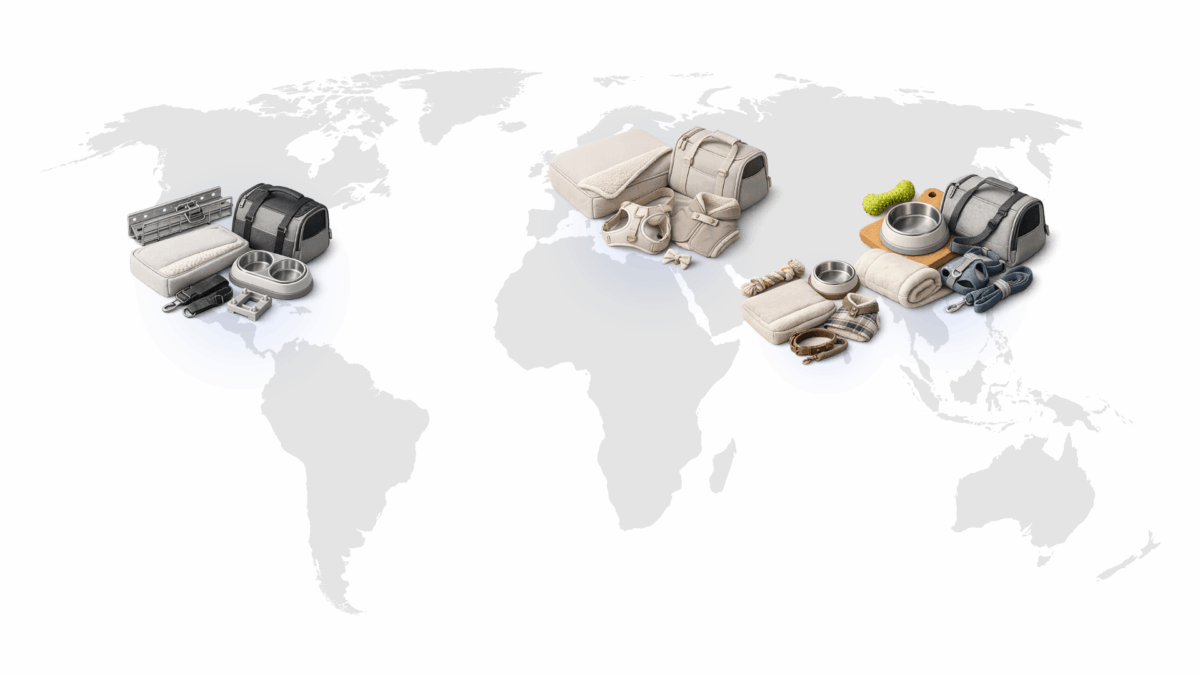
Best Countries for Manufacturing Pet Products
China
Vietnam
India
Turkey
Mexico
China
Ideal For:
Toys, bowls, feeders, leashes/harnesses, carriers, crates.
Cost Snapshot: Medium
Lead Times: 60–120 days
Vietnam
Ideal For:
Beds, harnesses, collars, apparel, soft carriers.
Cost Snapshot: Low–Medium
Lead Times: 75–120 days
India
Ideal For:
Rope toys, beds, metal bowls, leashes, collars, apparel.
Cost Snapshot: Low–Medium
Lead Times: 60–120 days
Turkey
Ideal For:
Premium beds, apparel, soft carriers, harnesses.
Cost Snapshot: Medium–High
Lead Times: 45–90 days
Mexico
Ideal For:
Metal crates, feeders, carriers, travel gear, plastic components.
Cost Snapshot: Medium
Lead Times: 30–60 days
Ready to Build a Better Pet Product Line?
Get matched with a vetted supplier and move from idea to production with confidence.
Pet Product Types We Support
From soft goods to molded toys to load-bearing gear, we connect you with manufacturers experienced in the materials, durability standards, and safety expectations of modern pet products.
Pet Beds & Soft Goods
Memory foam beds, plush cushions, crate pads, and high-denier fabric products built for long-term comfort and durability.
Leashes, Collars & Harnesses
Load-bearing gear using strong webbing, reinforced stitching, and hardware designed to withstand real-world pulling forces.
Pet Toys (Non-Food)
Rubber, silicone, rope, plush, and molded plastic toys engineered for bite resistance, durability, and safe play.
Bowls, Feeders & Mats (Non-Food Contact)
Stainless steel bowls, silicone mats, slow feeders, and storage units built with safe materials and consistent molding quality.
Carriers, Crates & Travel Gear
Soft-sided carriers, metal crates, travel accessories, and car restraints requiring strong frames, stitching, and hardware safety.
Grooming Tools & Accessories
Brushes, combs, nail tools, and non-electric grooming accessories made with safe plastics, metals, and ergonomic designs.
Pet Apparel & Wearables
Jackets, sweaters, booties, and breathable mesh products tailored for comfort, range of motion, and durability.
Key Manufacturing Risks to Avoid
Pet products endure chewing, pulling, scratching, and high mechanical stress. These are the risks that lead to failure, safety incidents, or rapid product wear.
Weak or Inconsistent Materials
Low-tensile webbing, poor-quality plastics, or cheap rubber compounds can break, tear, or splinter during use.
Poor Stitching & Construction
Single-stitched load points, uneven seams, or weak bar tacks lead to seam failures in harnesses, leashes, and beds.
Low-Quality Hardware
Brittle buckles, weak D-rings, and untested carabiners can fail, causing escapes or injuries.
Toy Breakage or Chew Failure
Inadequate material hardness or poor molding quality leads to toys breaking into swallowable pieces.
Lack of Testing Capability
Factories that don’t perform tensile, bite-resistance, or abrasion tests cannot assure durability.
Material Substitution Without Notice
Cheaper foams, fillers, plastics, or fabrics dramatically reduce product life and safety.
When Brands Seek a New Manufacturer
These issues signal that your current supplier may be holding back product quality, safety, cost, or growth.
- Toys breaking or failing bite-resistance expectations
- Webbing, stitching, or hardware failures in leashes/harnesses
- Beds flattening or foam degrading quickly
- Color fading, shedding, or fabric pilling
- Poor-quality molding for bowls or feeders
- Failed tensile or durability tests
- Inconsistent quality from batch to batch
- Slow communication or missed production deadlines
- Sudden price increases without transparency
- Lack of testing, documentation, or traceability
Frequently Asked Questions
High-tensile webbing, reinforced nylon, TPE/TPU, natural rubber, stainless steel, and heavy-denier fabrics are common. For bowls and feeders, only food-contact-safe materials should be used.
Pet products require tensile strength tests, bite resistance tests, abrasion testing, seam strength verification, and food-contact compliance for bowls and feeders.
China excels in molded toys, silicone, hardware, and carriers. Vietnam and Turkey lead in textiles. India is strong in metal bowls, rope toys, and canvas goods. Mexico is ideal for metal and nearshore plastics.
Hardware failures, stitching tearing, toy breakage, foam degradation, inconsistent plastics, and material substitution are frequent problems.
Yes. We diagnose failure points, audit factory capabilities, and match you with vetted suppliers who can meet your durability and safety standards.
Recent Pet Products Blogs

Founding Stories: How The Farmer’s Dog Came to Be (and Why the Business Is Here to Stay)
It’s no secret that a steady diet of fresh food...
Read MoreReady to Build a Better Pet Product Line?
Get matched with a vetted supplier and move from idea to production with confidence.